
How Drugs Affect Your Brain
Drugs can change how the brain works, affecting memory, concentration, emotions, judgment, and decision-making. Understanding these effects helps students make informed choices and protect their mental and physical health.
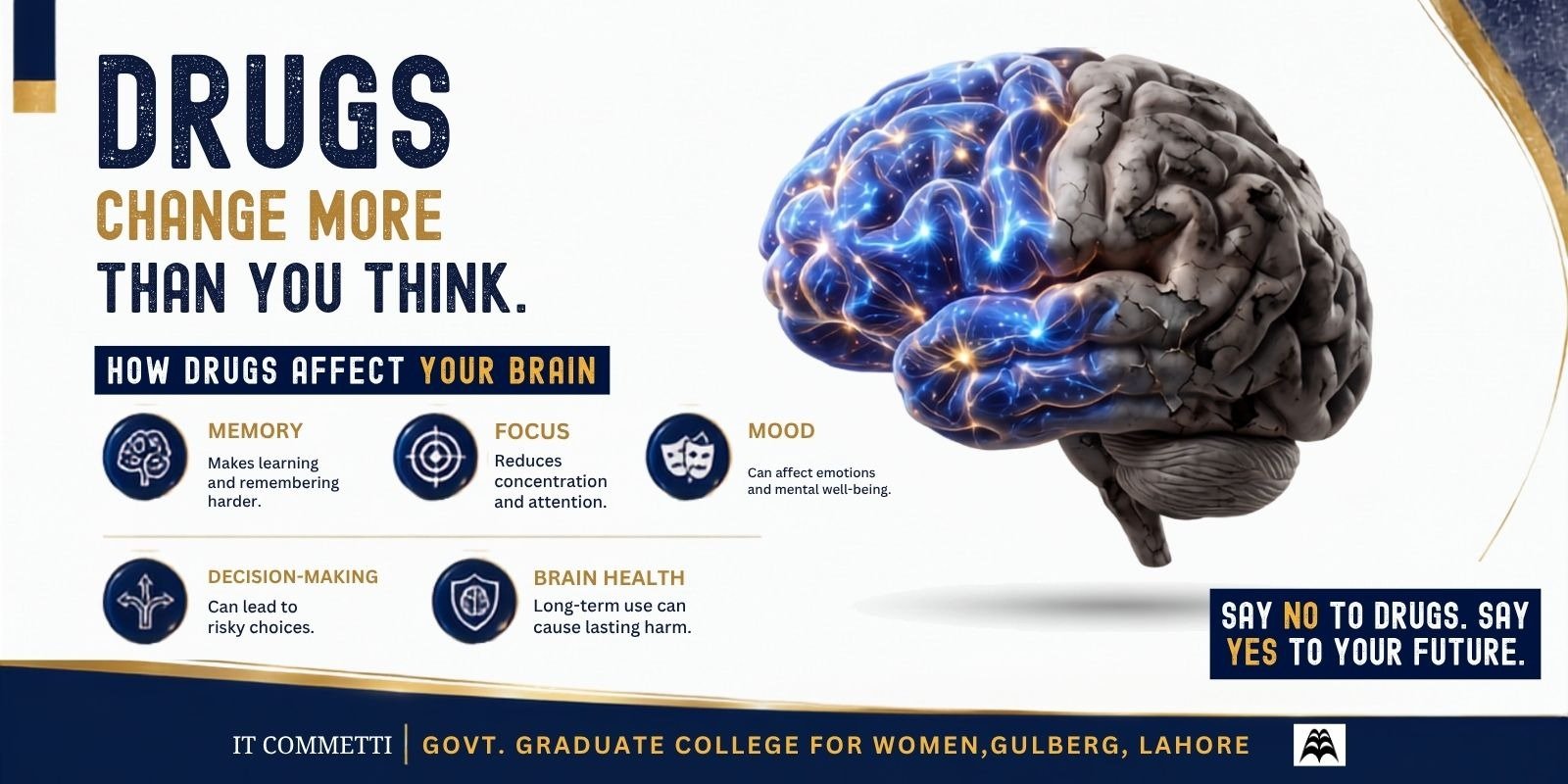
Drugs can alter the way the brain communicates and processes reward, judgment and memory. Learning the facts helps students make safer, informed choices and seek support early.How Drugs Affect Your Brain
The brain controls how we think, feel, learn, remember, and make decisions. Drugs can interfere with these normal processes by changing the way brain cells communicate. Some effects may be temporary, while repeated or long-term drug use can cause more serious problems.
Memory and Learning
Drug use can make it harder to remember information and learn new things. For students, this may affect studying, classroom participation, assignments, and academic performance.
Focus and Concentration
Some drugs can interfere with attention and concentration. A person may find it difficult to stay focused, organize thoughts, or complete everyday tasks effectively.
Mood and Emotions
Drugs can influence the brain systems involved in emotions. Depending on the substance and individual, drug use may contribute to anxiety, irritability, mood changes, or depression.
Decision-Making
Drugs can impair judgment and reduce a person's ability to evaluate risks. This can increase the likelihood of unsafe or impulsive decisions.
Long-Term Brain Health
Repeated drug use can change brain pathways related to reward, motivation, and self-control. Some substances can lead to dependence or addiction, making it increasingly difficult to stop using them despite harmful consequences.
Protect Your Brain, Protect Your Future
Your brain plays an important role in your education, relationships, health, and future goals. Learning about the risks of drugs, developing healthy coping strategies, and seeking support when needed can help protect your well-being.
Choose knowledge. Choose healthy choices. Choose a drug-free future.